
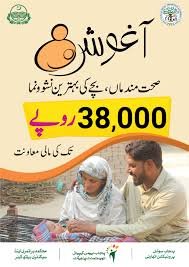
Aghosh Program
Introduction – A Health-First Initiative for Mothers and Children
The Aghosh Program is a landmark maternal and child health welfare initiative launched by the Government of Punjab under the leadership of Chief Minister Maryam Nawaz Sharif. It is designed to provide financial support and medical assistance to eligible pregnant women and mothers of children under two years of age. The program links cash transfers to healthcare milestones such as antenatal visits, hospital delivery, and child immunization, ensuring that both mothers and children receive proper medical care at crucial stages.
This initiative places a strong emphasis on improving maternal and infant health outcomes — particularly in underserved districts of Punjab — by removing financial barriers to healthcare and encouraging regular use of medical services.
Why the Aghosh Program Was Introduced
Maternal and child health remains a priority for provincial health policy. The Aghosh Program was introduced to:
Encourage regular prenatal and postnatal health check-ups.
Reduce the financial burden of childbirth and early childcare.
Promote safe, hospital-based deliveries.
Increase rates of early immunization and health monitoring.
Support low-income families in remote and underserved districts.
Significantly, a healthy mother is seen as central to family and community well-being — and this scheme aligns healthcare incentives with positive health behaviours.
Who Can Benefit: Eligibility Criteria
To be eligible for the Aghosh Program, applicants must generally meet the following criteria:
Pregnant women, women currently expecting a child.
Mothers of children up to two years old.
Resident of one of the designated 13 districts where the program is implemented (e.g., Dera Ghazi Khan, Muzaffargarh, Bahawalpur, Rahim Yar Khan, and others).
Possess a valid CNIC and be registered with the provincial health system.
Registration with relevant health facilities such as Basic Health Units (BHUs) or Rural Health Centres (RHCs) is required for access to both medical services and cash benefits.
The program targets women in under-resourced areas where maternal and child healthcare access has traditionally been limited.
Financial Assistance Breakdown
The Aghosh Program links cash support to key health milestones throughout pregnancy and early childcare. While the total support is often cited as up to Rs 23,000, variations and updated support figures may be announced from time to time based on provincial policy.
Typical Aghosh Payment Schedule (Punjab)
Amounts and stages may vary, but a common structure includes:
Rs 2,000 upon initial registration at a health facility.
Rs 1,500 per antenatal visit (e.g., four scheduled check-ups, often totaling Rs 6,000).
Rs 4,000 upon delivery at a government health center.
Rs 2,000 for the newborn’s first medical visit within 15 days of birth.
Rs 5,000 for registering the newborn’s birth certificate at the health facility.
Rs 4,000 linked to child immunization milestones (e.g., Rs 2,000 per stage).
This phased cash transfer model reinforces safe healthcare practices: every financial incentive is tied to a specific maternal or child health service.
Some sources also report variations — such as total support figures (e.g., up to Rs 38,000 under extended versions of the program) — but even the standard Rs 23,000 plan remains widely promoted.
Healthcare Services & Support Included
Participation in the Aghosh Program also provides access to:
Free medical check-ups for mothers during pregnancy and after childbirth.
Trained birth assistance and delivery care at provincial health facilities.
Newborn health examinations and immunizations.
Nutrition and health education, including hygiene awareness and family planning guidance.
Conditional cash transfers that incentivize proper use of health services.
These services are integrated with existing primary healthcare infrastructure, making it easier for beneficiaries to receive both medical care and financial support in one visit to a government facility.
How to Apply (Step-by-Step)
The registration and application process for the Aghosh Program is typically conducted through the provincial health network. Here’s how it usually works:
Visit a Government Health Facility:
Go to the nearest Basic Health Unit (BHU), Rural Health Center (RHC), or designated clinic in the eligible district.Meet with a Health Visitor:
A Lady Health Visitor (LHV) or trained staff member will assist with program registration.Provide CNIC and Relevant Details:
The staff will use your CNIC and other personal information to register you in the program’s electronic medical record (EMR) system.Follow Healthcare Schedule:
Attend the scheduled antenatal visits, deliver at the health facility, and bring the newborn for check-ups and immunizations — these steps qualify you for subsequent cash assistance.
Beneficiaries must retain records of visits and communications to track payments and ensure eligibility for each milestone benefit.
Benefits of the Aghosh Program
The Aghosh Program delivers multiple benefits to families and public health overall:
1. Reduced Financial Burden on Families
By providing cash at key stages of pregnancy and early childcare, the program offsets costs for medical check-ups, delivery, and infant care.
2. Improved Maternal & Infant Health
Linking cash transfers to health services encourages regular antenatal visits and immunizations — which are essential for reducing maternal and infant mortality rates.
3. Increased Hospital Deliveries
Financial incentives for hospital-based deliveries help shift births from unassisted home settings to safer healthcare facilities.
4. Encourage Early Child Immunization
Staged cash benefits tied to newborn immunizations promote adherence to vaccination schedules.
5. Health Education & Awareness
Participation often involves engagement with health education on hygiene, nutrition, and family planning.
Together, these benefits contribute to long-term improvements in community health, creating stronger foundations for childhood development and family well-being.
District Coverage & Priority Areas
The first phase of the Aghosh Program is being implemented in 13 selected districts of Punjab, chosen based on need and healthcare access challenges. These include:
Dera Ghazi Khan
Muzaffargarh
Bahawalpur
Rahim Yar Khan
Rajanpur
Layyah
Kot Addu
Bhakkar
Mianwali
Khushab
Bahawalnagar
Taunsa Sharif
Lodhran
This targeted roll-out ensures that areas with critical maternal and child health gaps receive priority support through the program.
Frequently Asked Questions (FAQs)
1. Who qualifies for the Aghosh Program?
Pregnant women and mothers with children up to two years old, residing in the eligible Punjab districts and with valid CNIC, can apply.
2. How much financial assistance is provided?
Under the standard plan, beneficiaries may receive up to Rs 23,000 in staged payments linked to healthcare milestones. Some updates report extended benefit options as well.
3. Do I need to deliver at a hospital to receive benefits?
Yes — part of the cash benefits is tied to delivering at a registered government health facility.
4. How is the money disbursed?
Payments are usually transferred via government systems — such as direct transfer or through designated program disbursement agents — after verification of healthcare visits.
5. What if I miss a medical visit?
Missing scheduled healthcare appointments may affect eligibility for certain cash stages. Beneficiaries are encouraged to follow the full health visit schedule.
Conclusion – Building Healthy Futures for Mothers and Children
The Aghosh Program represents a progressive step in Punjab’s social and health policy, combining financial support with essential healthcare services. By incentivizing regular check-ups, safe deliveries, and immunizations, it strengthens maternal and child health outcomes while easing economic stress on families. The phased cash-transfer model ensures that women receive timely support when it matters most — making the program both a lifeline for vulnerable communities and a model for inclusive health governance.
By linking support to meaningful health outcomes, the Aghosh Program helps Punjab move toward healthier families, stronger children, and more resilient communities — one mother and one baby at a time.